What does thin coat rendering mean?
A thin coat render is a relatively fine decorative finishing layer, usually applied over a compatible prepared base. It creates a consistent textured appearance without the depth of a traditional render build-up at the finishing stage. The base layers still have to provide a sound and suitable background.
The term describes a type of finish rather than a complete wall construction. A thin coat system may be used over suitable masonry preparation, a specified carrier or an external insulation build-up. Each arrangement needs compatible components. Choosing the visible texture alone does not establish whether the rest of the system is right for the building.
Where it can work well
Extensions, new walls and existing rendered elevations can all be candidates, depending on their condition and construction. A fine finish can bring visual consistency to a house with several different surfaces, but the differences underneath still need careful detailing.
Where render meets brick, timber cladding or stone, the junction should be designed to accommodate the materials and shed water appropriately. Openings and corners need particular attention. John will look at the existing details and explain any preparation or changes required before the finish can be applied.
Thin coat render and insulation
Thin coat finishes are often seen as part of external wall insulation systems, where a separate insulating layer sits behind a reinforced base and decorative coat. The finish itself should not be described as the insulating element. Thermal performance comes from the specified build-up as a whole.
If insulation is your main priority, say so at the beginning. Thickness, window reveals, roof overhangs, pipe positions and the base of the wall may all change when insulation is added. Building requirements and the suitability of the system need assessment. John can discuss the scope rather than assume that every rendering job includes insulation.
Preparing the background
Existing finishes must be checked for adhesion, loose areas and moisture problems. A stable wall and compatible preparation are essential. Deep unevenness may need levelling before the thin finishing layer is considered. Applying a decorative coat directly over defects can leave those problems unresolved.
The specified base coat and reinforcement help form a continuous background for the finish. Reinforcement is detailed around openings and other vulnerable locations as required by the system. It can help manage stresses within the render but cannot stop structural movement in the building. Existing movement joints need to remain part of the design.
Application and finishing details
John agrees the finish, access arrangements and protection before work starts. Glazing, doors, paving and adjacent materials need masking or protection appropriate to the job. Ventilation openings, damp-proof details and drainage paths must remain functional when the new surface is complete.
Weather and curing conditions guide the sequence of base preparation and finishing. Working methodically across an elevation and using sensible stopping points helps achieve a consistent texture. John reviews the result with you, including the less prominent details around sills, corners and the bottom edge.
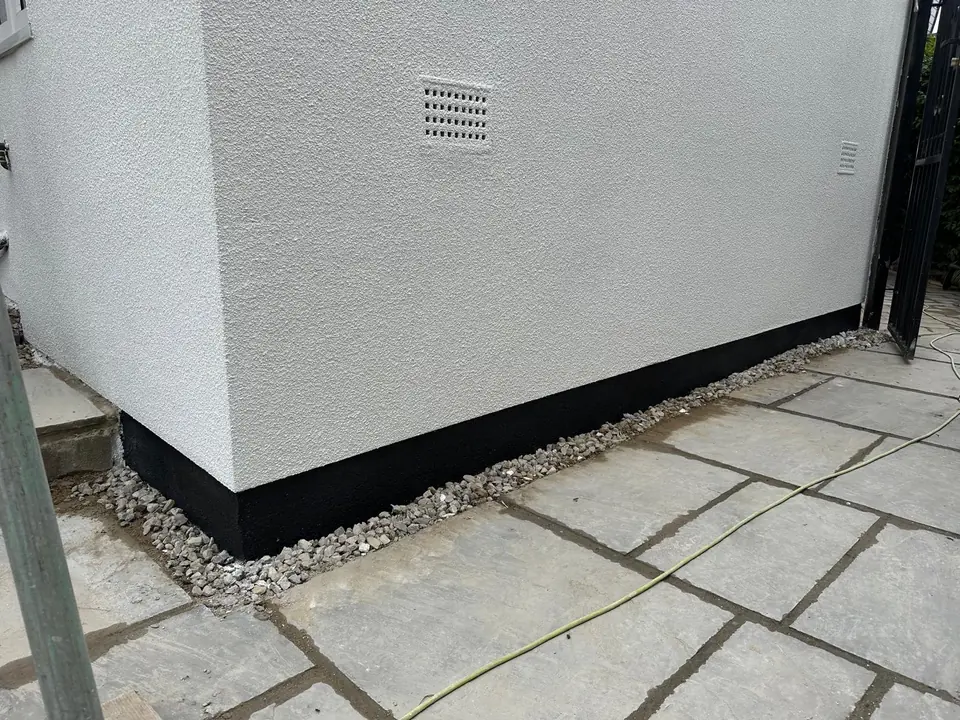
For ongoing care, keep gutters working and inspect joints and vulnerable edges periodically. Ask about suitable cleaning before using strong chemicals or pressure washing. The projects gallery includes a close view of a render line above a dark plinth, useful when thinking about the meeting of finishes. For colour choices, read our coloured render service, or contact John with the surfaces you have in mind.
Good questions
Before you choose.
Can thin coat render cover old render?
Sometimes, after the existing material has been checked and prepared. It must be sound, compatible and sufficiently even for the proposed build-up.
Does the mesh stop all cracking?
Reinforcement helps manage stresses in a specified render system. It does not repair structural movement or remove the need for correct joints and preparation.
Is insulation included?
Only if it forms part of the agreed specification. A thin decorative render finish and a complete external wall insulation system are different scopes of work.